
Inquiry
Form loading...

High-Quality Isoquinoline from China Suppliers - Trusted Isoquinoline Factory for Your Chemical Needs

Basic Information

Discover high-quality products manufactured in China, where reliable suppliers and experienced factories come together to deliver exceptional value. Our extensive network of trusted China suppliers ensures that you receive top-notch items that meet rigorous quality standards. Whether you're looking for innovative designs or classic staples, our factories are equipped to produce a wide range of products tailored to your needs. Experience the difference in craftsmanship and service that only leading Chinese manufacturers can provide. Explore our collection today and partner with the best suppliers in China for all your procurement needs
  • CAS Number 119-65-3
  • Molecular Formula C₉H₇N
  • Molucular Weight 129.16
  • Package: 200kg galvanized steel drum, or as per customer requirements
  • Storage Keep sealed, dry and away from light under room temperature.
  • Retest Period One Year

Product Description

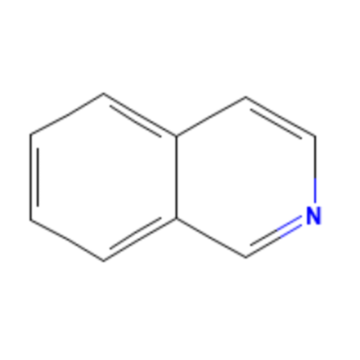
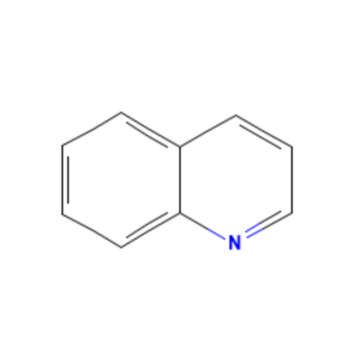
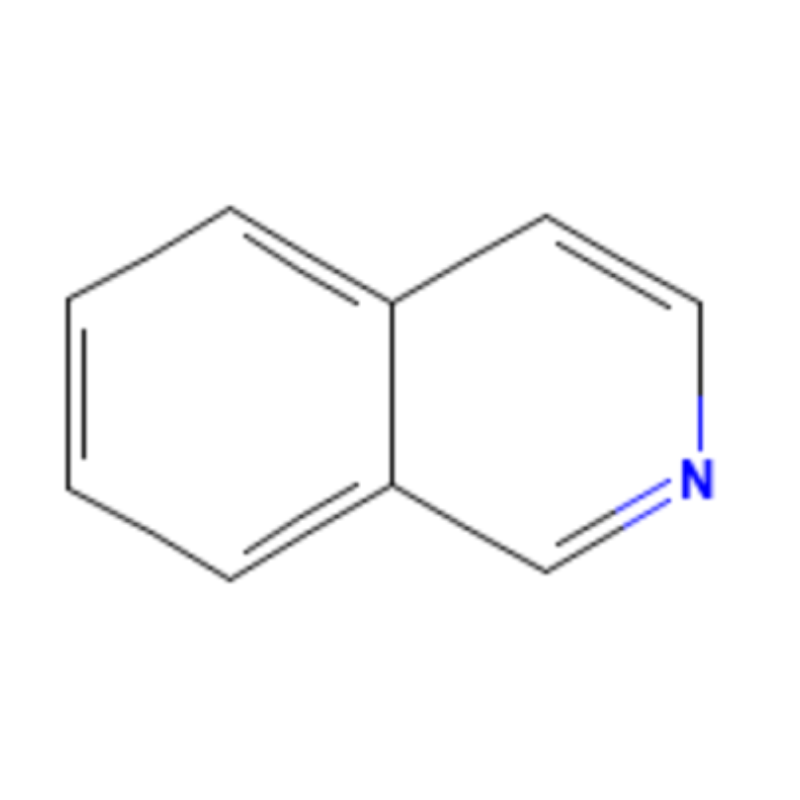
Isoquinoline (chemical name: Benzo[c]pyridine; CAS No.: 119-65-3; molecular formula: C₉H₇N; molecular weight: 129.16) is an important nitrogen-containing heterocyclic aromatic compound, isomeric with quinoline, featuring a fused benzene and pyridine ring structure.

It is a key organic intermediate widely used in the production of pharmaceuticals, pesticides, dyes, rubber additives, and other fine chemical products. It exhibits excellent reactivity in organic synthesis, playing a crucial role in the preparation of various functional compounds.

Chemical Name
Benzo[c]pyridine
CAS Number
119-65-3
Molecular Formula
C₉H₇N
Molecular Weight
129.16
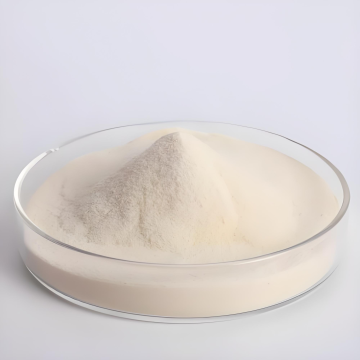
Isoquinoline chemical structure and product packaging
Physical & Chemical Properties

As a core industrial chemical, isoquinoline appears as a colorless to pale yellow liquid or low-melting solid with a characteristic pungent odor. It has a melting point of 26–28℃, a boiling point of 243℃ (at normal pressure), a density of approximately 1.099g/cm³ (20℃), and a flash point of 107℃ (closed cup). It is slightly soluble in cold water, freely soluble in hot water, and miscible with most organic solvents such as ethanol, ether, benzene, and chloroform. Strict storage and transportation conditions must be followed to maintain its stability and prevent degradation.

Quality Control Standards

For quality control, isoquinoline complies with strict industrial grade standards: purity ≥98.0% (GC); related substances (individual ≤0.1%, total ≤2.0%); appearance (colorless to pale yellow liquid/solid, no visible impurities) and packing integrity (well-packed 200kg galvanized steel drums without damage). It also controls water content (<0.2%), residual solvents (methanol ≤0.3%, ethanol ≤0.5%), heavy metals (≤10 ppm), loss on drying (≤0.5%) and residue on ignition (≤0.1%) to ensure batch consistency and product safety.

Industrial Applications

Industrially, isoquinoline is widely applied: in the pharmaceutical field, it is used to synthesize antimalarial drugs, analgesics, and antitumor agents; in the dye industry, it serves as an intermediate for vat dyes and acid dyes; in the rubber industry, it acts as an antioxidant and vulcanization accelerator; it also functions as a corrosion inhibitor, organic solvent, and chiral ligand in asymmetric catalysis.

Safety & Hazard Identification Isoquinoline is a hazardous chemical (UN 2656, Class 6.1 Toxic Substance, Packing Group III). It is harmful if swallowed or in contact with skin, causes eye and skin irritation, and is toxic to aquatic organisms with long-term environmental hazards. Proper protective equipment should be worn during operation, and storage/transportation must strictly follow the specifications for hazardous chemicals.

Product Specification (COA)

Test Items Specifications Results Judgment
Appearance Colorless to pale yellow liquid/solid Conforms Conforms
Assay (Isoquinoline) ≥98.0% (GC) 98.25% Conforms
Water Contents ≤0.2% 0.12% Conforms
Melting Point 26–28℃ Conforms Conforms
Packing 200kg galvanized steel drum, Well packed without damage Conforms Conforms
Conclusion Comply with the requirement

Storage and Transport Conditions

Transport Conditions

Keep sealed, dry and away from light for transportation under room temperature, using suitable packaging to prevent leakage and exposure to heat sources.

Storage Conditions

Keep sealed in 200kg galvanized steel drums, dry and away from light, heat sources and open flames under room temperature.

Frequently Asked Questions (FAQ)

1. What is Isoquinoline and what is its primary industrial role?
Isoquinoline (CAS: 119-65-3) is a nitrogen-containing heterocyclic aromatic compound and an isomer of quinoline. It functions as an essential chemical intermediate in pharmaceuticals, dye synthesis, rubber additives, corrosion inhibitors, and chiral catalysis.
2. What are the key physical properties and melting point of Isoquinoline?
It appears as a colorless to pale yellow liquid or low-melting solid with a pungent odor. It features a melting point of 26–28℃, a boiling point of 243℃, a density of approximately 1.099g/cm³ (at 20℃), and a flash point of 107℃.
3. What quality control specifications does your Isoquinoline fulfill?
Our industrial grade Isoquinoline achieves a purity assay of ≥98.0% (GC), with moisture content ≤0.2%, individual related substances ≤0.1%, heavy metals ≤10 ppm, and loss on drying ≤0.5%.
4. How is Isoquinoline packaged and delivered?
The product is securely packed in standard 200kg galvanized steel drums without damage, sealed tightly to prevent moisture absorption and light exposure during room temperature transit.
5. What safety and hazard class applies to Isoquinoline?
Isoquinoline is classified as UN 2656, Class 6.1 Toxic Substance (Packing Group III). It is harmful upon skin contact or ingestion, irritating to eyes and skin, and requires proper PPE and hazardous material handling compliance.
6. What is the solubility profile of Isoquinoline?
It is slightly soluble in cold water, freely soluble in hot water, and completely miscible with most typical organic solvents, including ethanol, diethyl ether, benzene, and chloroform.

Leave Your Message